I am not slowing down, and development is moving forward steadily.
Recently I worked on the HDD sound synthesizer partly for fun, and partly to clear my mind after spending time in the darker corners of x86 internals. We are using multiple harmonics, but this part still needs tuning to reach the right level of immersion.
I already have an HDD seek test and a synthesized HDD head movement sound, and I will keep refining both.
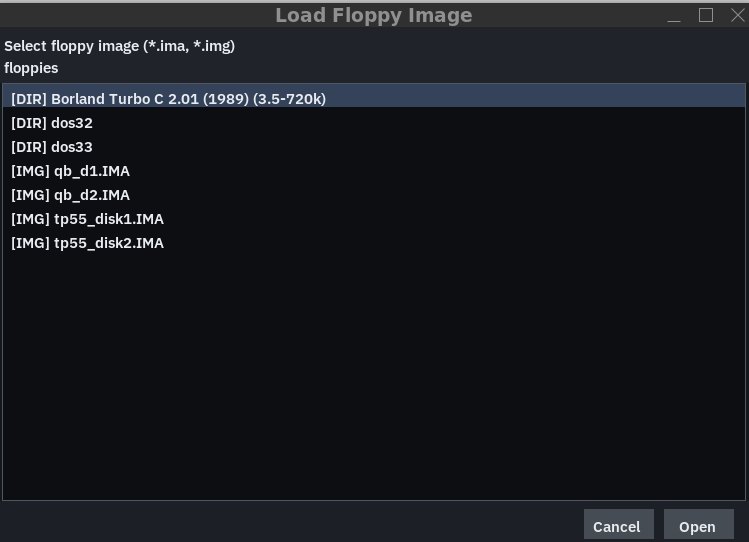
On the UI side, I extended the workflow so I can now create HDD images directly from the UI, and reload floppy images at runtime from the UI.

I also set up CI, Prometheus, and Grafana. Google Benchmark will run continuously, and its results will be tracked over time as a performance baseline.
Another usability improvement is dynamic emulation speed control from the menu, so I can speed up or slow down the emulator on demand.
I also spent a lot of time on C++ performance optimizations. Fast feature progress caused diagnostic logic to accumulate, which started to slow the emulator down, so I have been actively cleaning and optimizing those paths.
Next steps are focused on multiple small bug fixes. For example, the ALT key sometimes does not work correctly in Turbo Pascal and fails to trigger as expected.
I am also planning an engine rework: splitting sound, machine emulation, rendering, and SDL event handling into separate threads. Right now I can observe slowdowns during intensive typing in QuickBasic and other text editors, so this architecture change should improve responsiveness.
A new demo video is coming soon on the YouTube channel: https://www.youtube.com/@daveemu-retro - stay tuned.